Vision•
15 min read
How CSS Officers Shape Pakistan’s Future
The role of bureaucracy in reforms, leadership, and national development.
Syed Moiz Ali
Author
2025-12-23
Published
How CSS Officers Shape Pakistan’s Future: Architects of the State
Author: Syed Moiz Ali
Date: December 23, 2025
Reading Time: 16 Minutes
Date: December 23, 2025
Reading Time: 16 Minutes
Introduction
In the grand theater of nations, Pakistan is currently performing a difficult act. We face an economic crunch, a climate crisis, and a youth bulge that can either be a dividend or a disaster.
While politicians provide the script (policy) and the army provides the security, it is the Civil Bureaucracy that builds the stage. They are the architects, the engineers, and the managers of the state machinery.
This article explores how the men and women of the Central Superior Services (CSS) are not just "administrators" but the actual drivers of Pakistan's future trajectory.
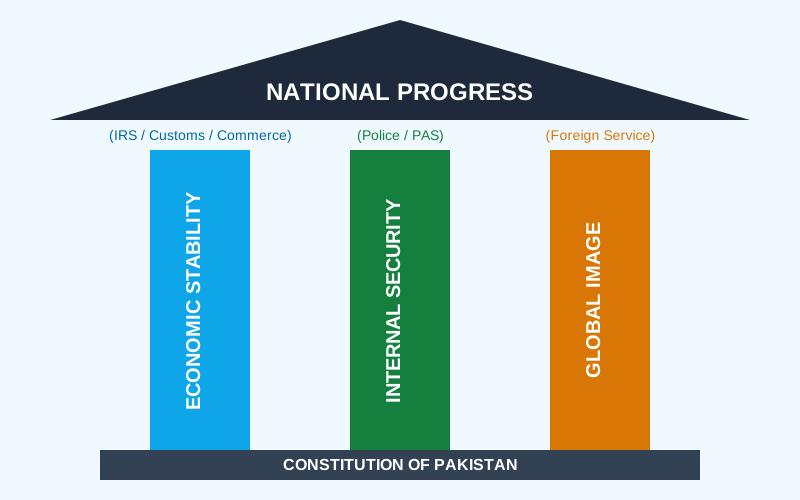
1. Economic Stabilization: The Revenue Engine
A state without revenue is a failed state.
- The IRS Role: The officers of the Inland Revenue Service are fighting the hardest battle—expanding the tax net. By digitizing the FBR (Federal Board of Revenue) and implementing Point-of-Sale (POS) integration, they are ensuring that the state has the funds to build schools and hospitals.
- The Customs Role: In an import-heavy economy, Customs officers at Karachi Port and Torkham Border regulate trade. They prevent smuggling (which destroys local industry) and facilitate legitimate exports (which bring dollars).
2. Internal Security: Generally and Specifically
Peace is a prerequisite for progress.
- The Police Service (PSP): The war on terror was fought by the Army, but the war on crime is fought by the Police. From counter-terrorism departments (CTD) to Safe City Projects in Lahore and Islamabad, PSP officers are using technology (AI facial recognition) to make cities safe for investment.
3. Diplomacy: The Soft Power
In 2026, wars are not fought with tanks; they are fought with narratives and trade deals.
- The Foreign Service (FSP): Our diplomats in Brussels are negotiating GSP+ status (tariff-free trade) for our textiles. Our engaging in Washington are securing climate finance. Every dollar that enters Pakistan often has a diplomat's signature behind it.
4. The Digital Transformation
The future of bureaucracy is digital.
- The E-Governance Revolution: CSP officers are leading the shift from "Files" to "Portals."
- Land Records: Punjab Land Record Authority (PLRA) digitized 150 years of manual records, ending the monopoly of the corrupt Patwari.
- Citizen Portal: The PMDU allows a citizen in a village to lodge a complaint against a corrupt official directly to the Prime Minister's office.
Conclusion
The Civil Service is often criticized for being "colonial," "slow," and "elitist." While these criticisms have merit, the solution is not to remove the bureaucracy but to reform it.
The future belongs to the "Technocratic CSP"—an officer who knows Python as well as they know the PPC. An officer who serves the public, not the protocol.
If you want to be part of this transformation, the door is open.
Equip yourself: Best Preparation Resources.
About Syed Moiz Ali
Specialist in Civil Services preparation and policy analysis. Dedicated to democratizing education for all Pakistani aspirants via cssguided.com.