Power•
15 min read
Why CSS Officers Have More Authority Than You Think
An insider look into the power structure and executive authority of a CSP officer.
Rabia Anwar
Author
2025-12-28
Published
Why CSS Officers Have More Authority Than You Think: The Anatomy of Power
Author: Rabia Anwar
Date: December 28, 2025
Reading Time: 16 Minutes
Date: December 28, 2025
Reading Time: 16 Minutes
Introduction
In Pakistan, the word "Power" is often confused with "Protocol." People think power is the blue light, the police escort, and the big house. While those are visible symbols, the real authority of a Central Superior Services (CSS) officer is far deeper and more systemic. It is the legal and executive leverage to move the heavy machinery of the state.
This article peels back the layers of bureaucratic authority, explaining exactly why a Grade 17 Assistant Commissioner often wields more influence than a corporate CEO earning ten times their salary.
1. The Legal Framework: It’s Not About Ego, It’s About Law
The power of a CSP officer is not personal; it is statutory. It comes from the Constitution and the Laws of Parliament.
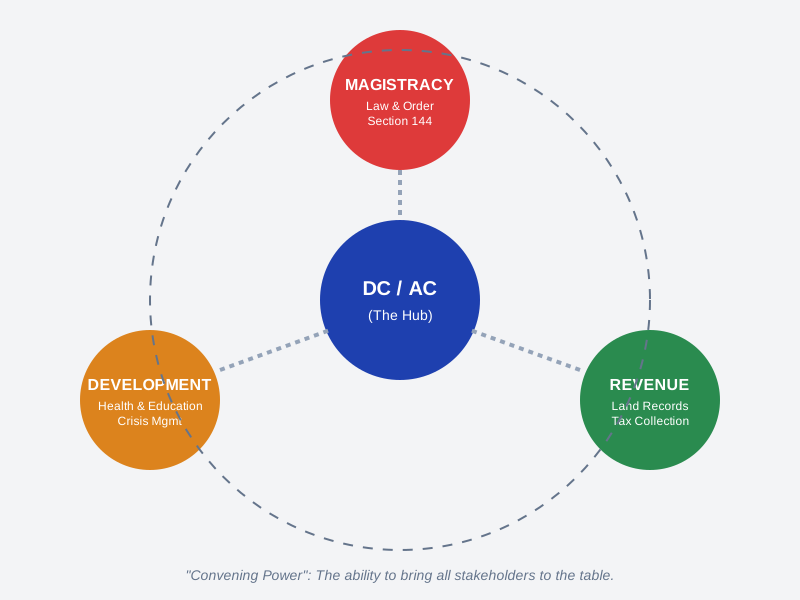
A. Special Judicial Magistrates (Sections 14 & 30 of CrPC)
While the judiciary is independent, the Executive (DC/AC) retains "Magisterial Powers" for reducing crime and maintaining order.
- Price Control: Under the Price Control Act, an AC can raid markets, fine hoarders, and seal shops selling expired food. This directly impacts the daily life of citizens.
- Preventive Detention (16 MPO): If a person is deemed a threat to public safety (e.g., during a riot), the DC can order their detention for up to 30 days under the Maintenance of Public Order ordinance.
B. Section 144 CrPC
You often hear "Section 144 Imposed." This is the power of the District Administration to ban the "assembly of 5 or more persons" or the "carrying of weapons." It is a massive tool used to prevent sectarian violence or political unrest.
C. Land Revenue Act 1967
In an agricultural economy like Pakistan, Land is Power. The DC is the "District Collector."
- Land Disputes: The revenue courts (Tehsildar -> AC -> DC) decide disputes over land ownership, inheritance, and partition.
- Land Acquisition: If the state wants to build a Motorway, CPEC project, or Dam, it cannot touch a single inch of ground until the Collector issues the "Section 4" notification.
2. Policy Implementation: The "Translation" of Power
Islamabad makes the policy; the Field Officer translates it into reality. This "translation gap" is where the officer's discretion (and power) lies.
- Example: Polio Campaigns. The policy is "Eradicate Polio." But in a village where people believe the vaccine is a conspiracy, the AC does not just "order" it. They convene the local Ulema, the tribal elders, and the police to create a strategy. The success of the global initiative rests on the AC's ability to negotiate at the micro-level.
3. The Power of "Convening"
Perhaps the most underrated power of a CSP officer is the Convening Power.
- The Scenario: There is a sectarian clash brewing between two groups in a district.
- The Action: The DC calls a meeting.
- The Result: Everyone comes. The Shia scholars, Sunni clerics, Traders Association, Bar Council (Lawyers), and Police heads. They sit at one table because the DC represents the State. No businessman, no matter how rich, can summon such a diverse group of stakeholders to a table to resolve a conflict. This ability to bring people together is the essence of administrative authority.
4. Crisis Management
Authority shines brightest in the dark.
- Disaster Response: During the 2022 Floods, it was the ACs standing in waist-deep water directing excavators to breach dykes to save cities. They have the authority to commandeer private vehicles, buildings (schools become relief camps), and resources under the National Disaster Management Act.
Conclusion
The authority of a CSS officer is a tool, not a trophy. It is designed to be used for the public good. Yes, it can be abused (and often is), but ideally, it is the force that keeps the chaotic systems of a developing nation from collapsing.
If you seek this authority, remember: "With great power comes great responsibility."
Ready to see the world? Explore CSS and International Exposure.
About Rabia Anwar
Specialist in Civil Services preparation and policy analysis. Dedicated to democratizing education for all Pakistani aspirants via cssguided.com.